THE DOCUMENTARY
Free State Begijnhof
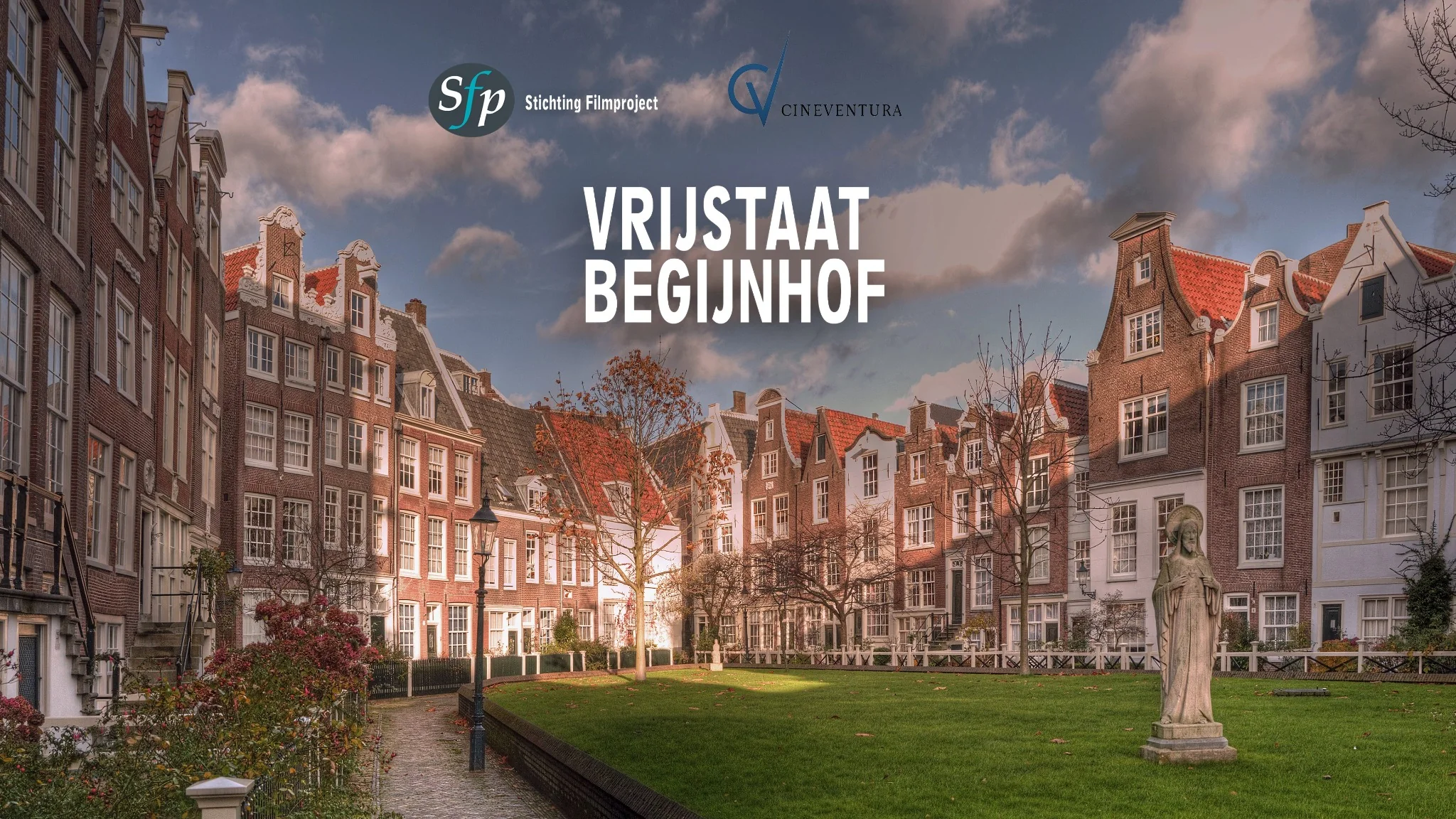
Free State Begijnhof is a documentary about a place in the heart of Amsterdam that is no ordinary residential neighbourhood. Its monuments and homes are managed by a private foundation, which allocates the dwellings, traditionally mainly to single women.
The Begijnhof is a place with its own rules, its own traditions and a history that for centuries has partly stood apart from the ordinary order of the city.
Behind the gate
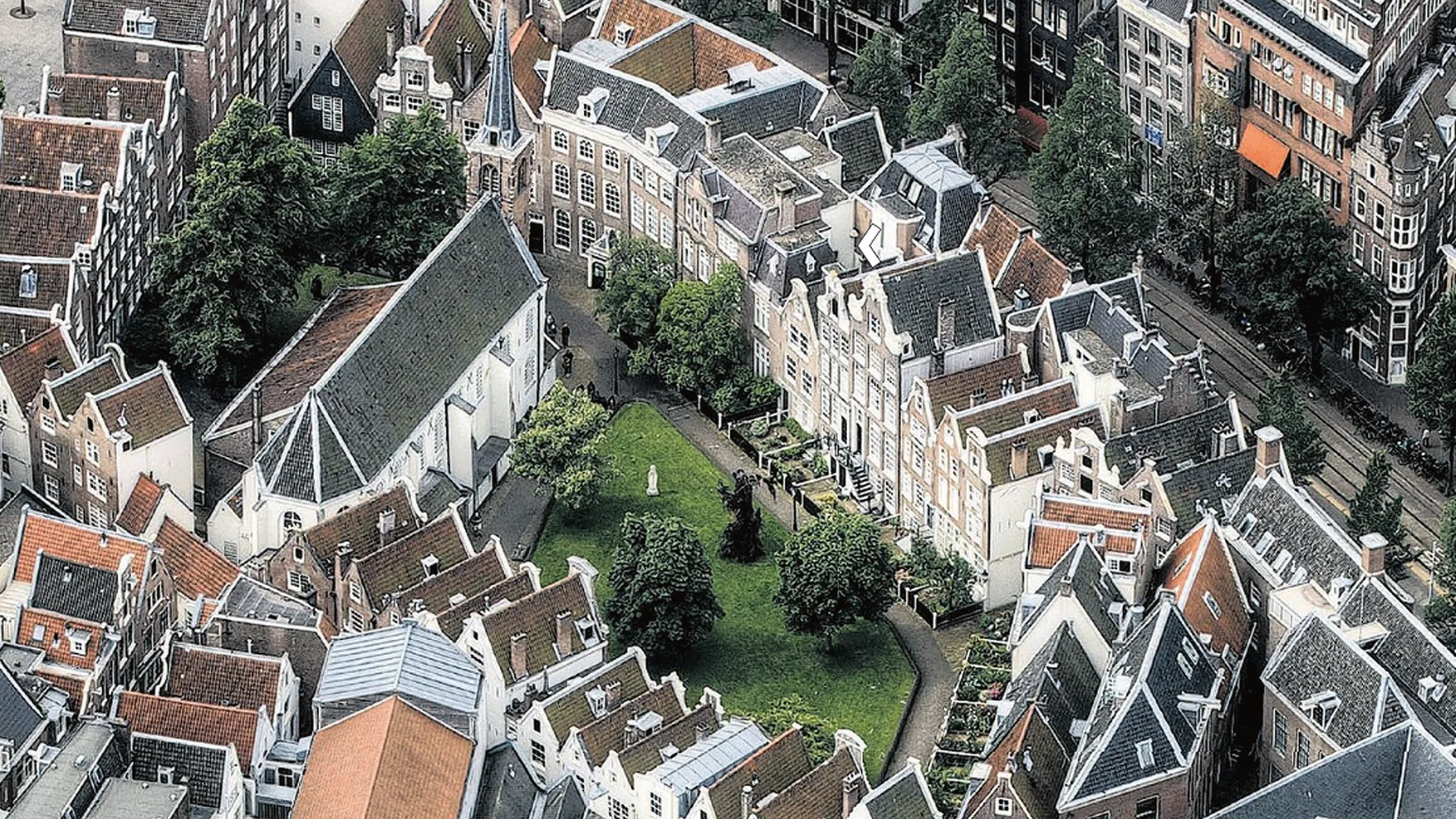
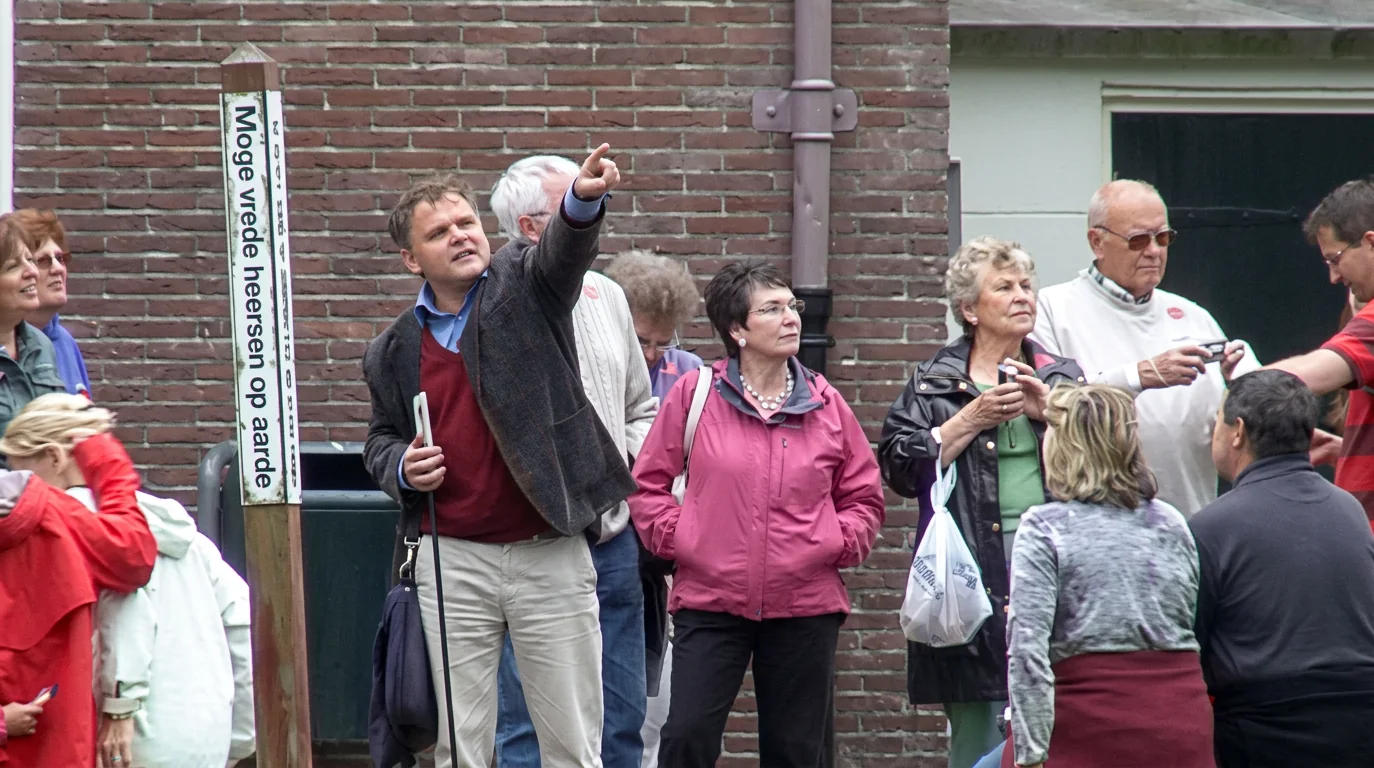
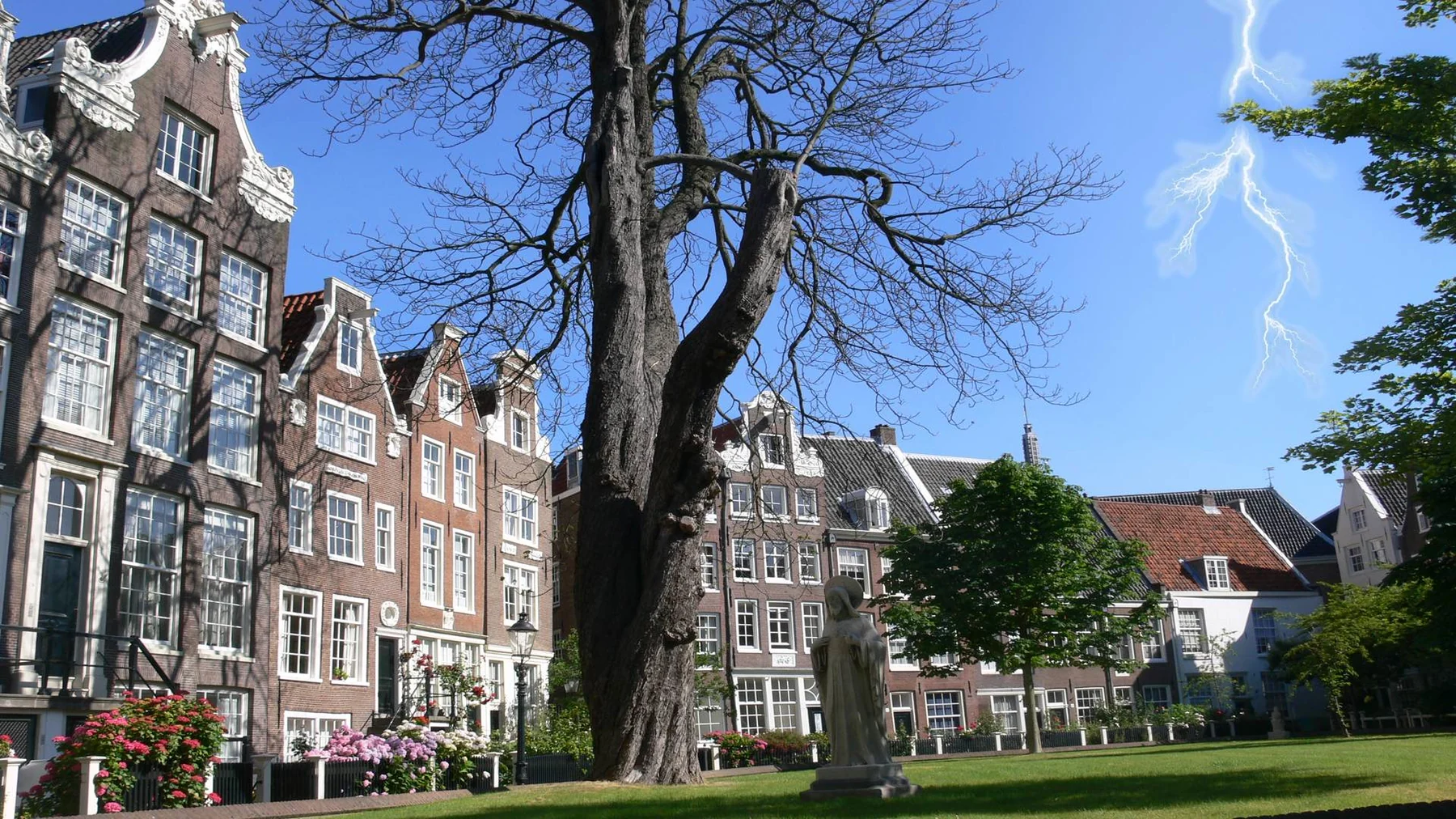
In the heart of Amsterdam, women have lived for centuries around an enclosed courtyard, old houses and two churches. During the day, visitors walk through what can sometimes resemble a living museum. Meanwhile, the residents participate fully in life beyond the courtyard. Especially when the gate closes in the evening and the crowds disappear, tranquillity returns.
A sheltered world
The exact date of foundation is unknown. Beguines are mentioned in Amsterdam in 1307; in 1346 a “Beghynhuys” is recorded.
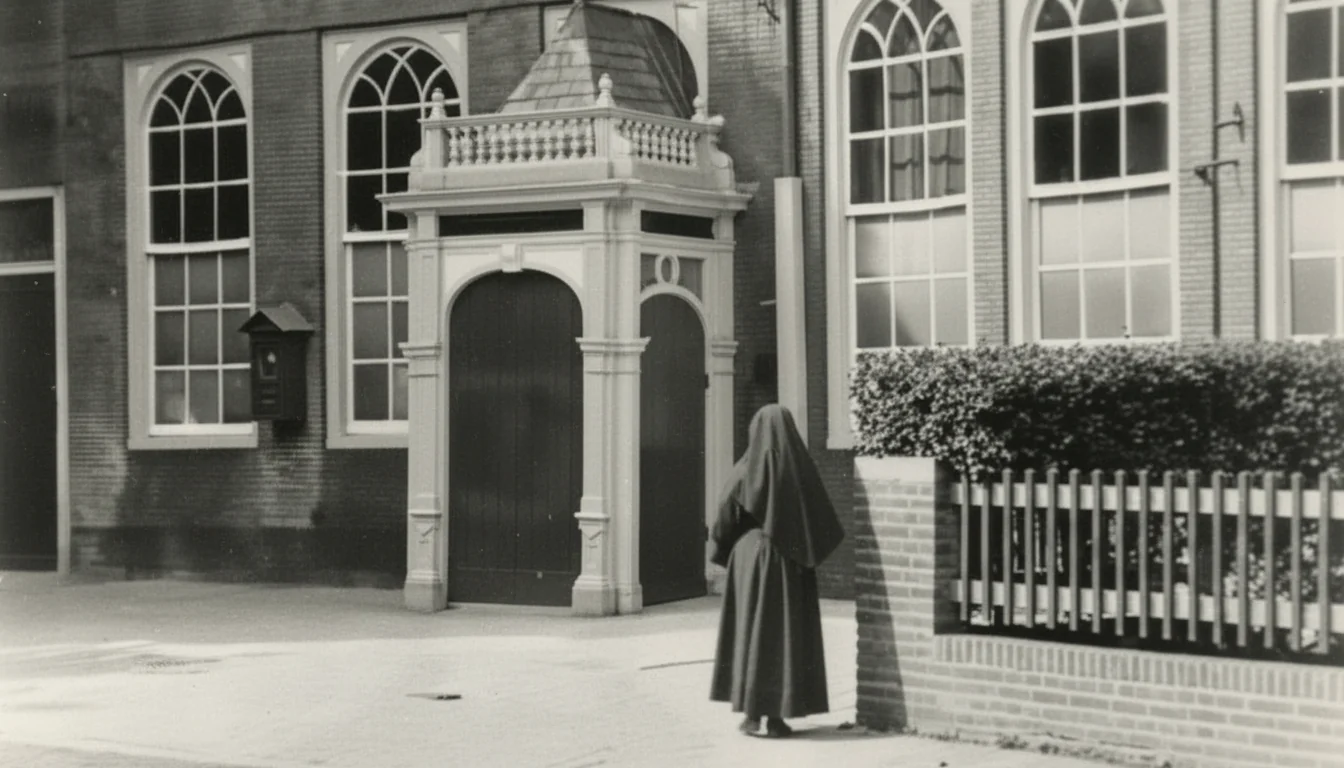
Beguines were not nuns and did not take lifelong monastic vows. They could retain property, worked among other things in care and education, and were free to leave the court. Women could enter when young, but also later in life, for example after becoming widowed. For women who did not want their families to arrange a marriage, life as a Beguine could also provide a way out.
A living place
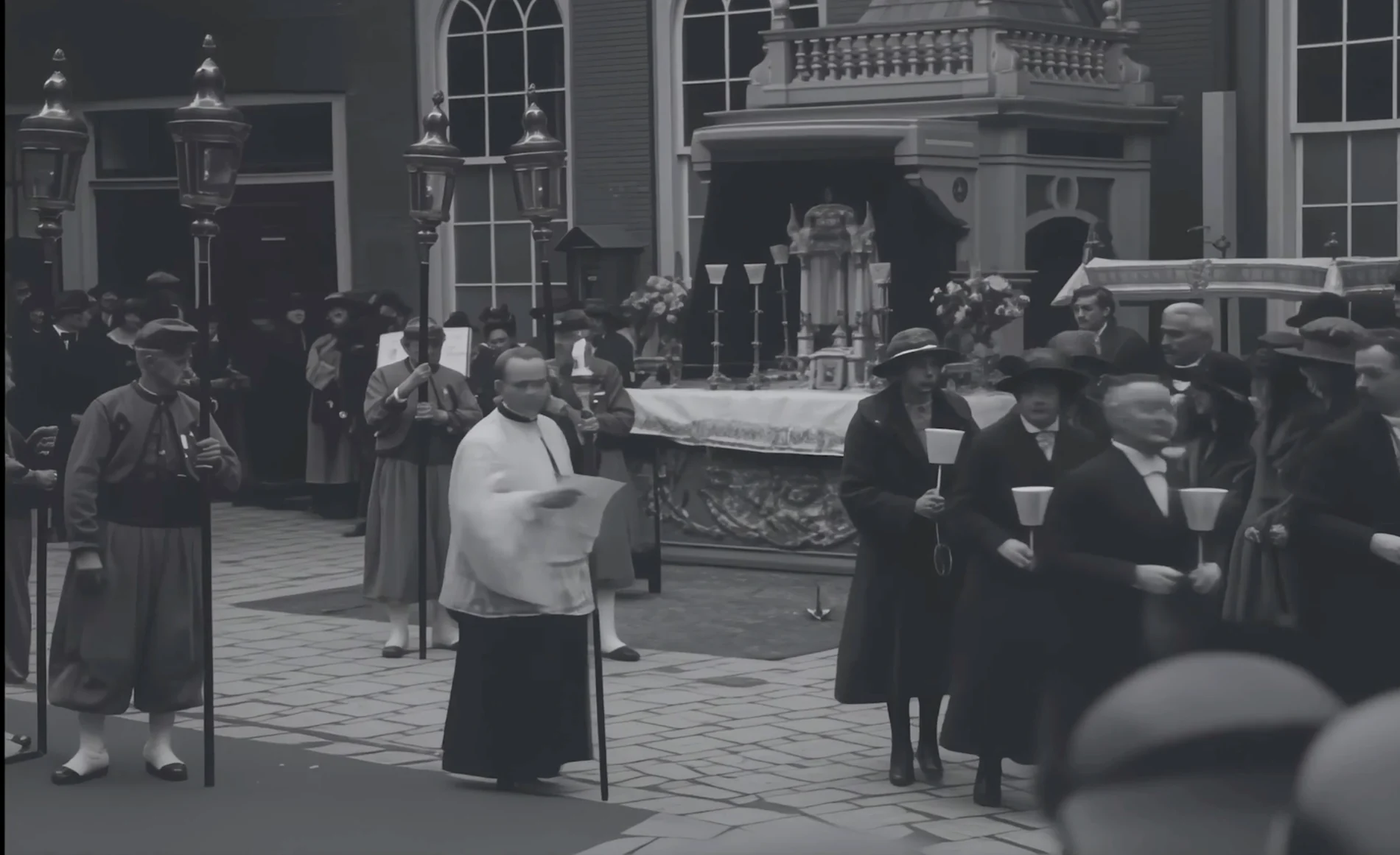
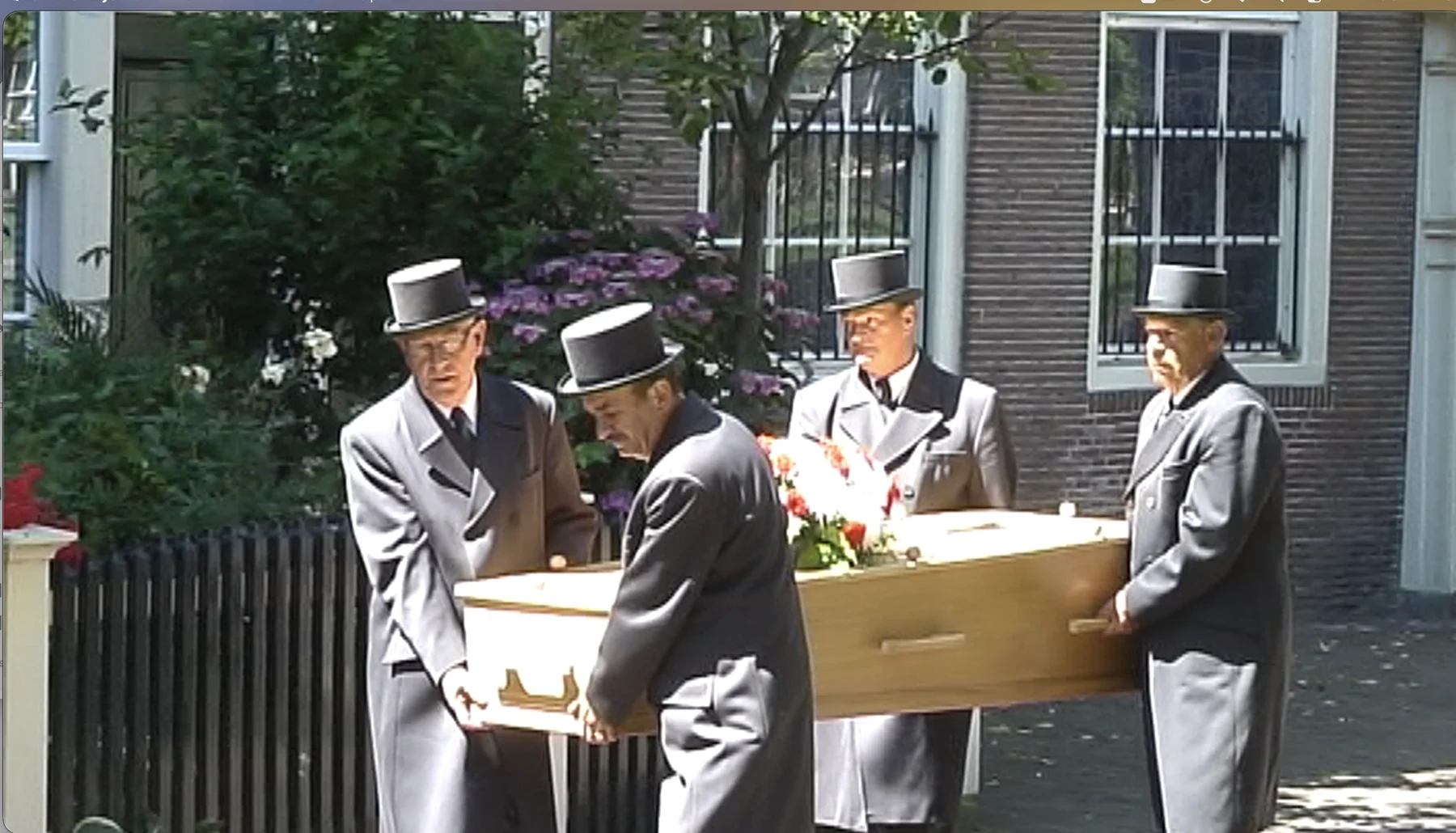
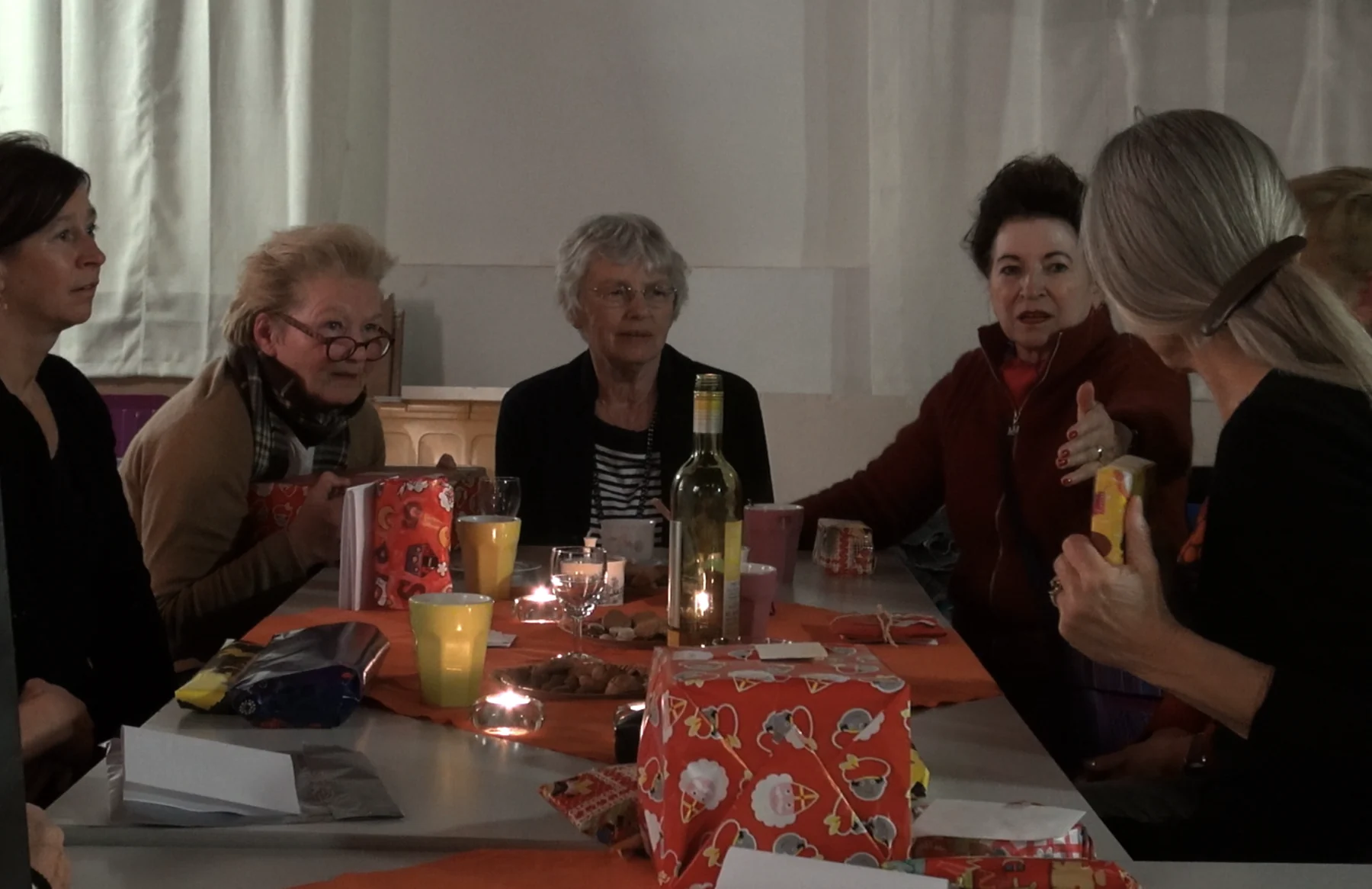
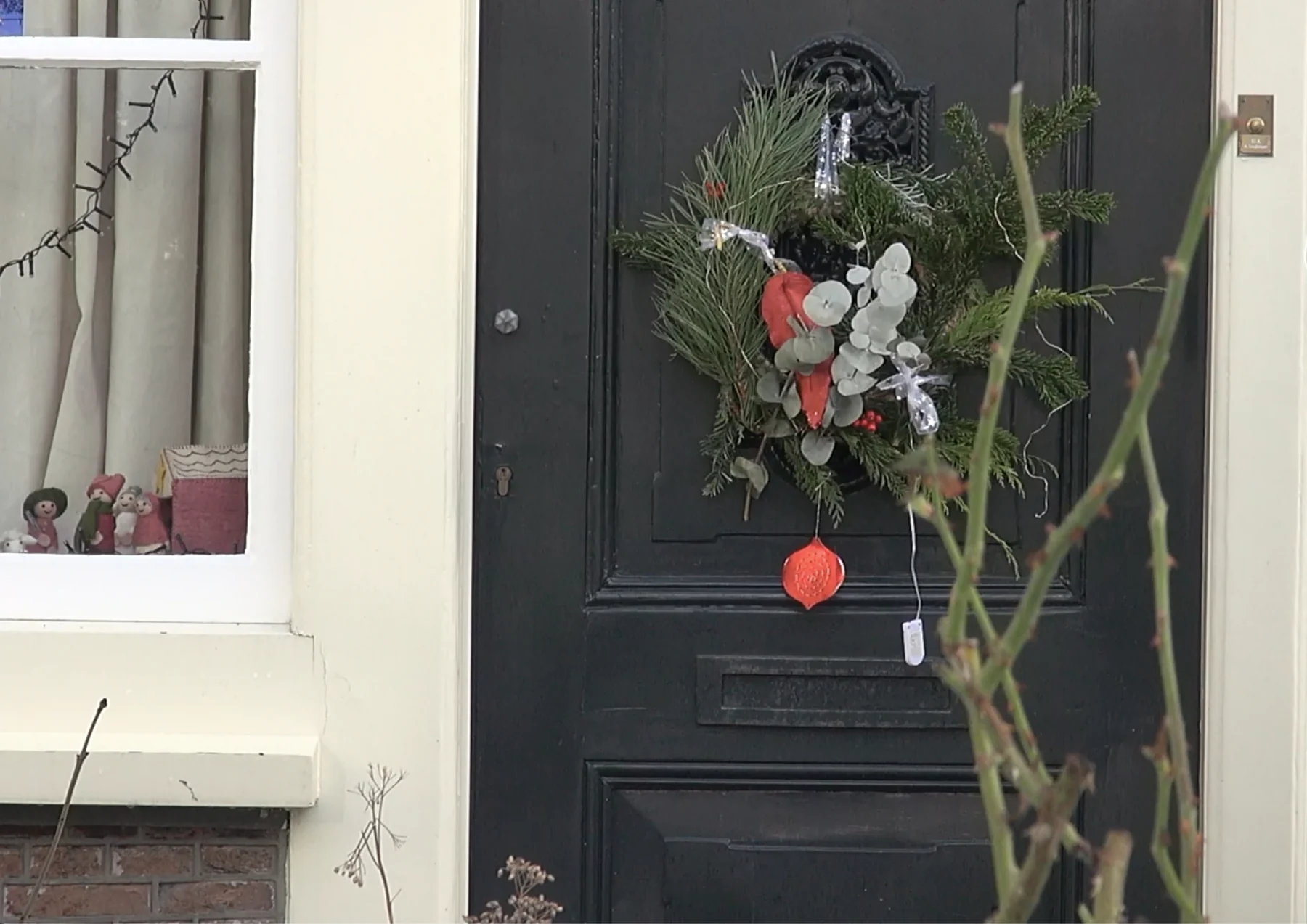
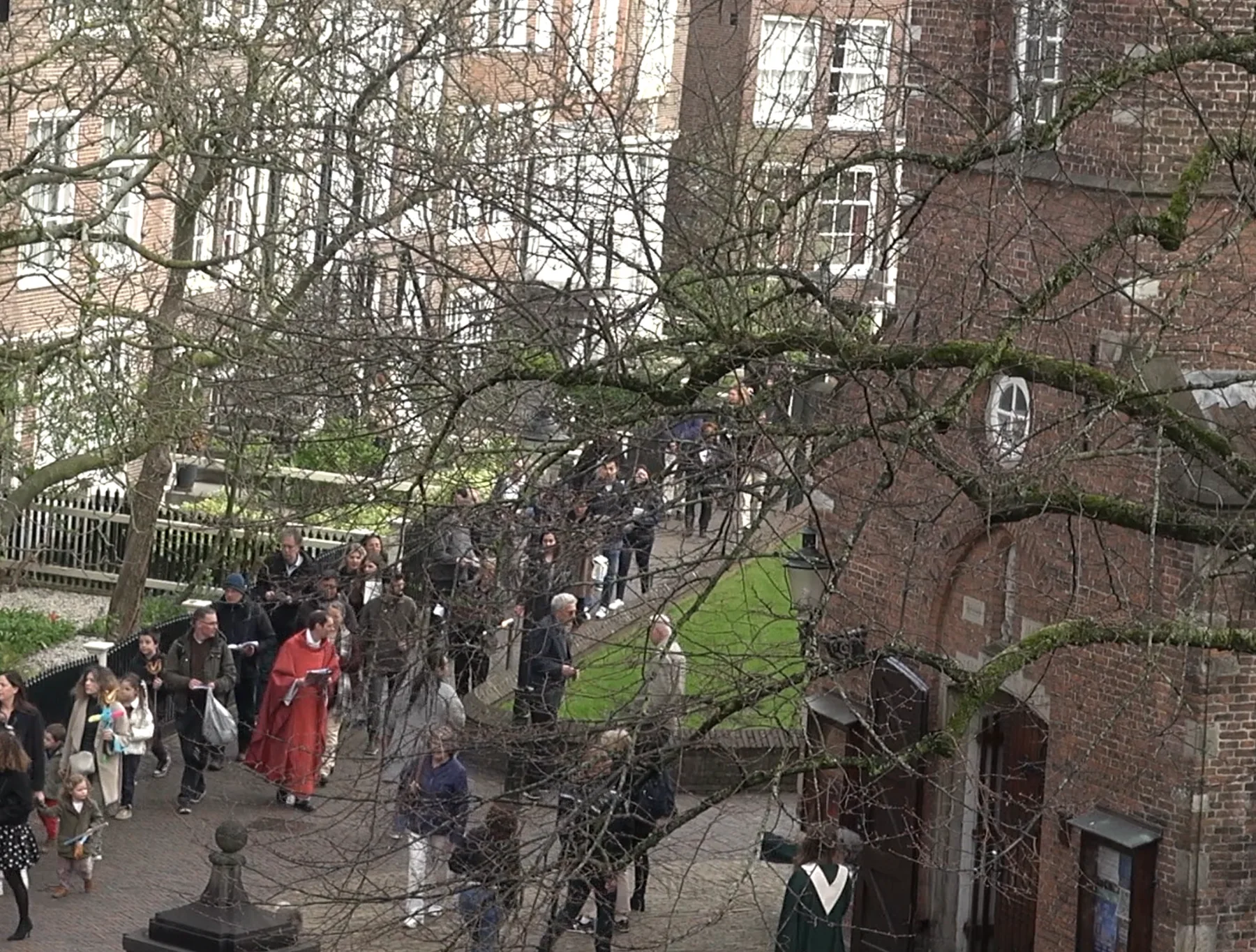
Life in the courtyard has never consisted of silence alone. Meals, music, celebrations, funerals, maintenance and mutual care are just as much part of it. The Begijnhof is still inhabited and continues to change.
Two churches in the courtyard
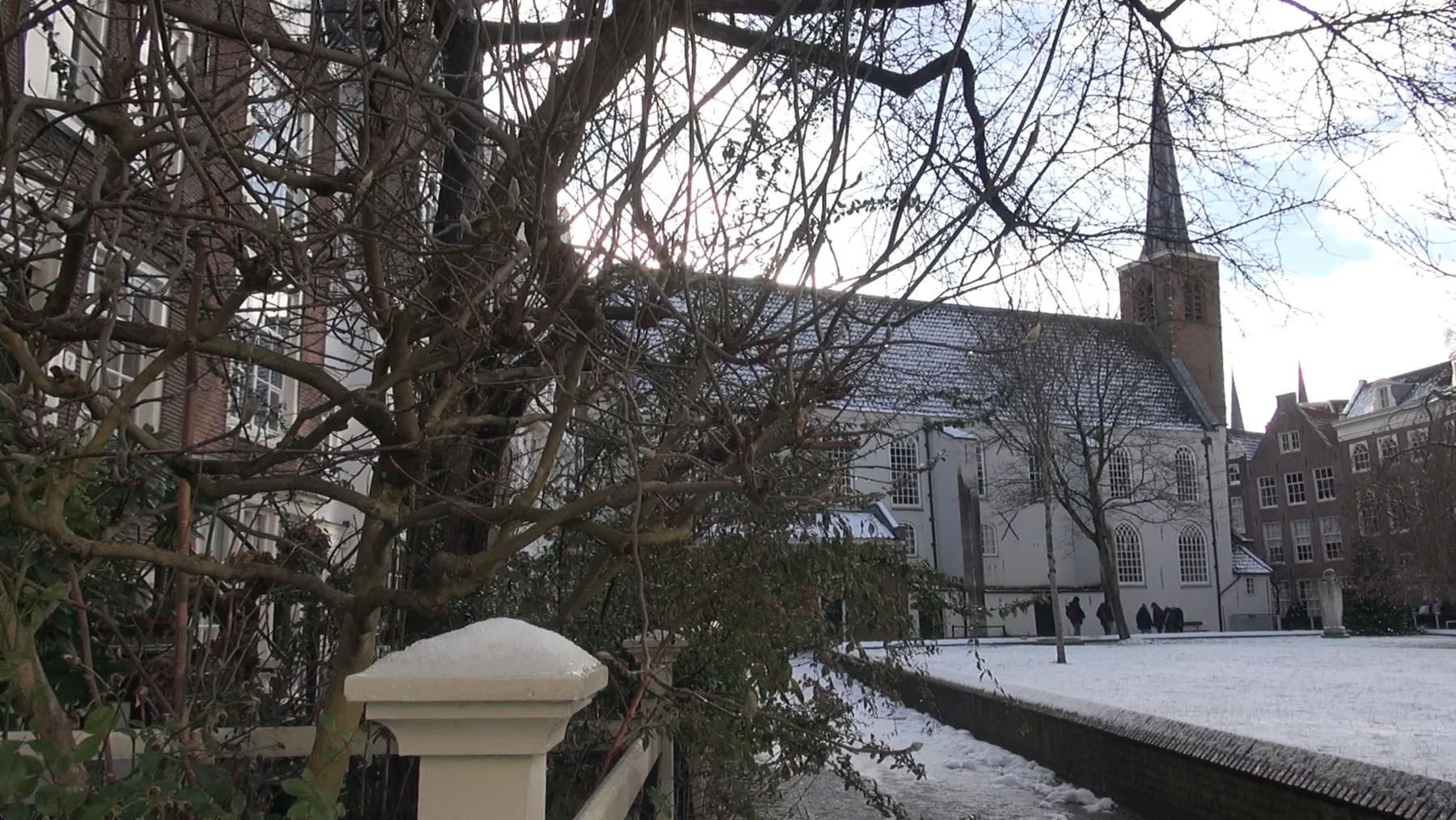
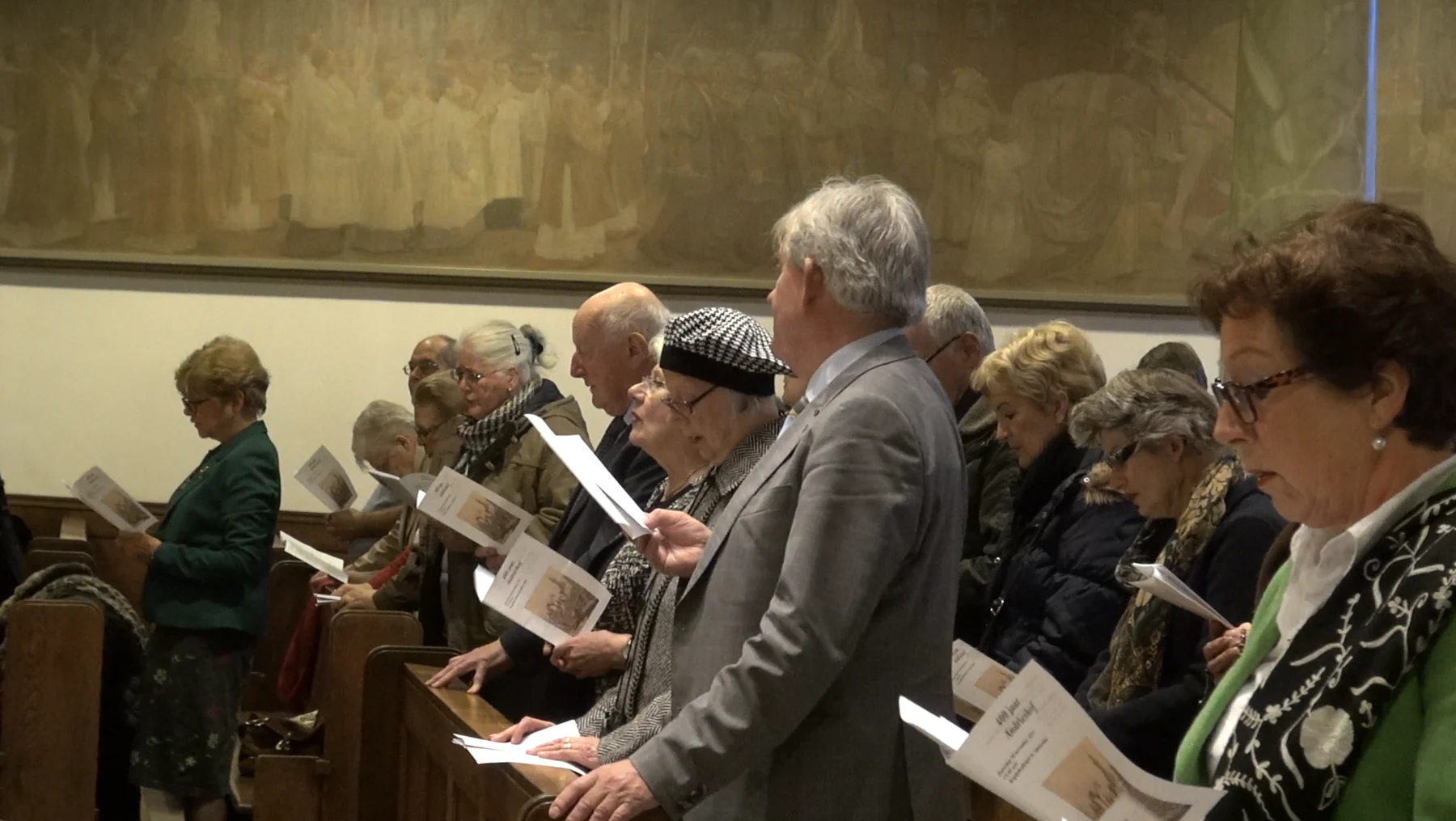
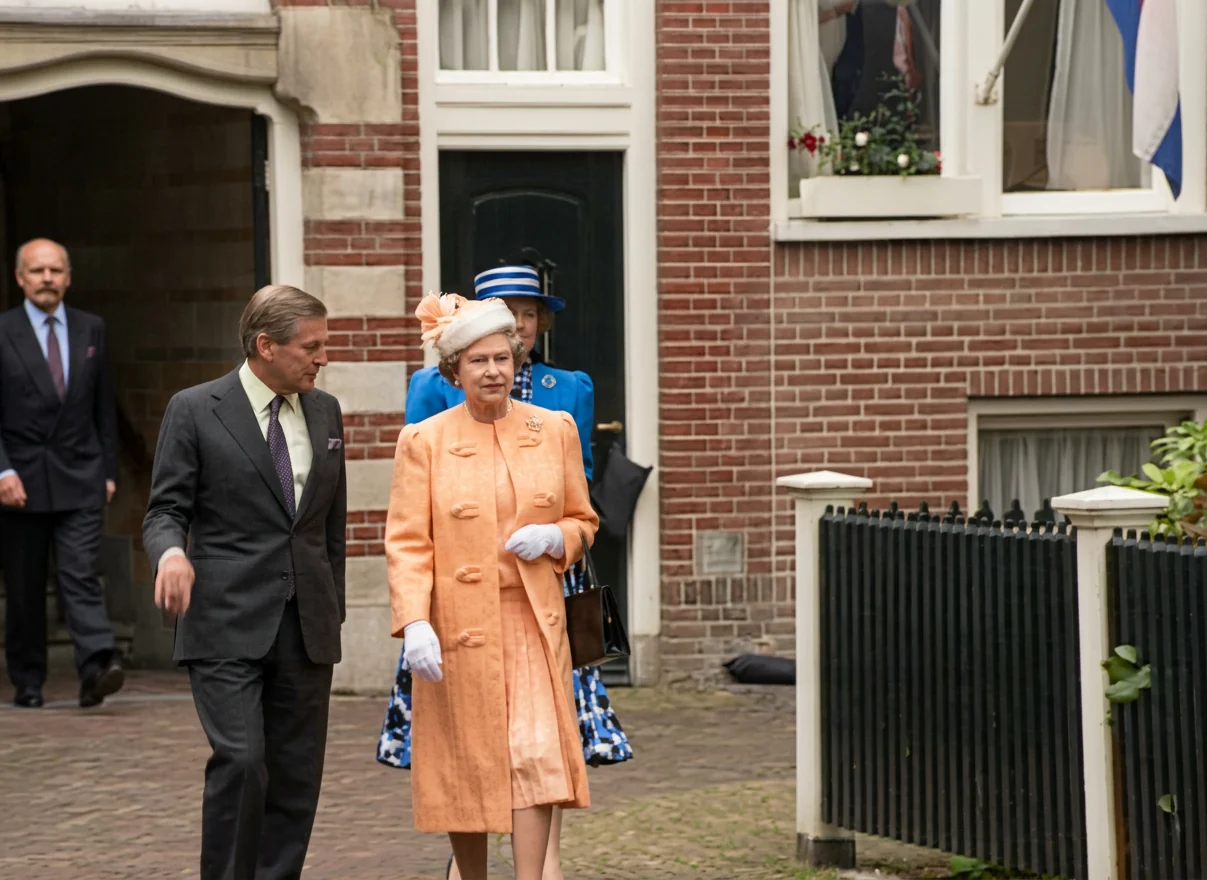
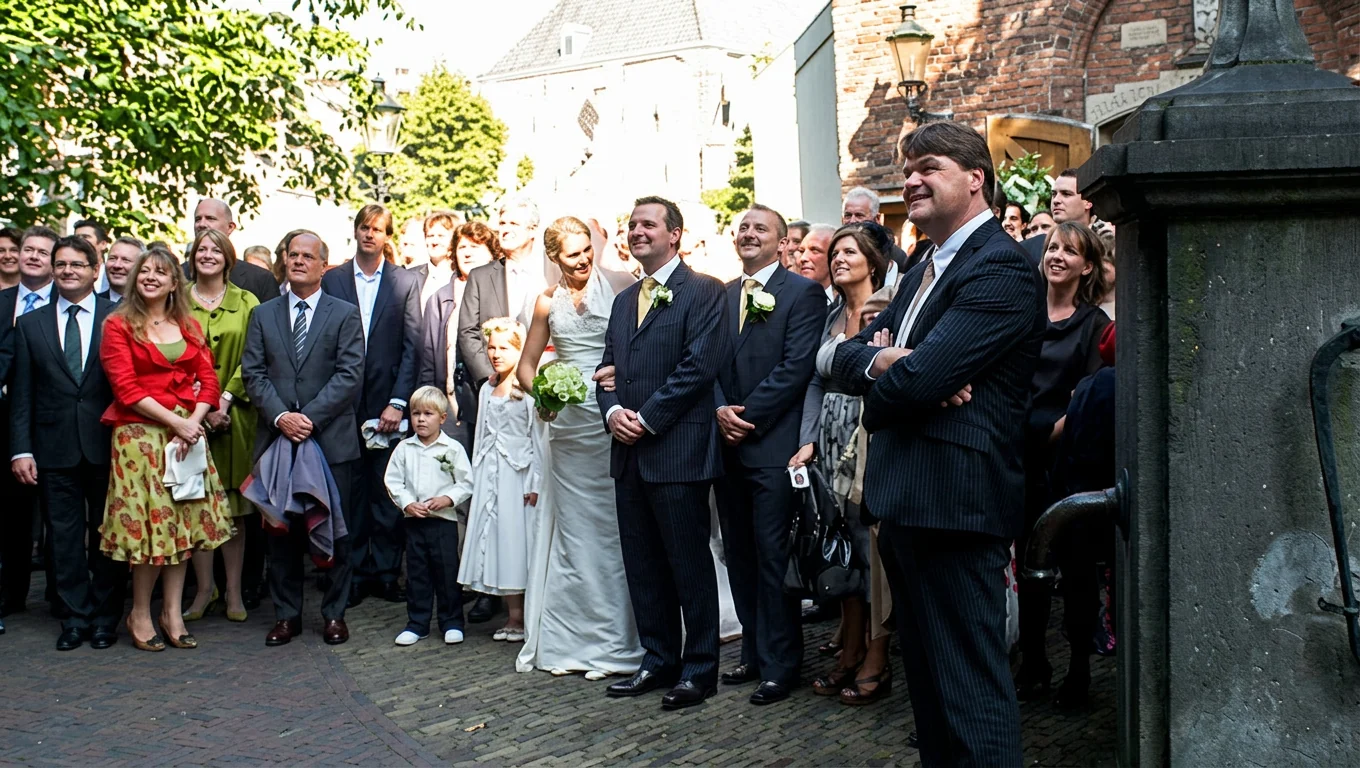
Two churches stand within the same enclosed courtyard. The English Reformed Church is a Presbyterian congregation belonging both to the Protestant Church in the Netherlands and to the Church of Scotland. It hosts many concerts and weddings. Queen Elizabeth II also visited the courtyard and the church.
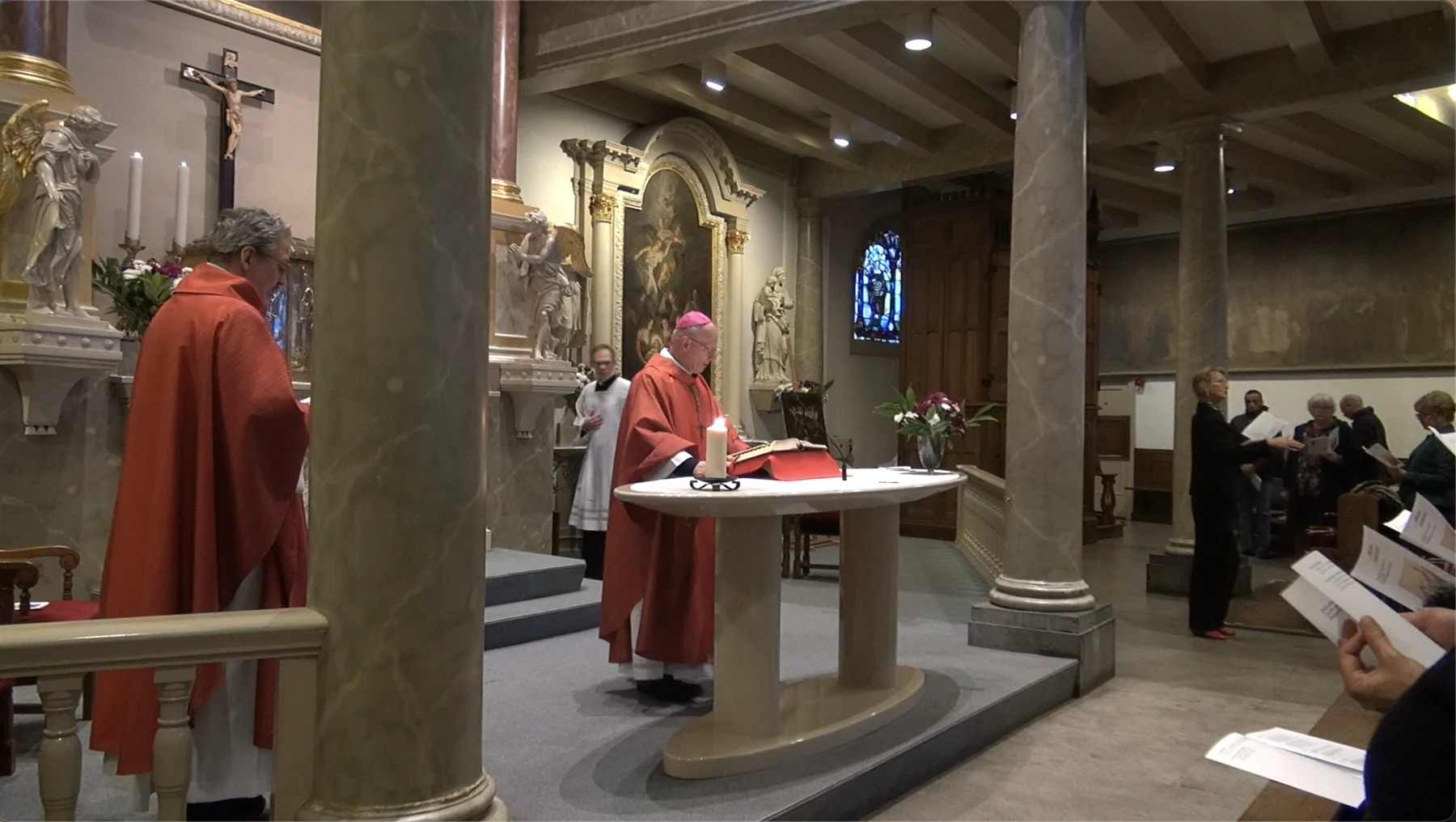
The Catholic Begijnhof Chapel was created after the Beguines lost their original church. Two houses were joined together to form a church space that could not be recognised as such from the outside. The chapel is still in use. Both churches remain places of prayer and spiritual refuge.
The city outside the gate
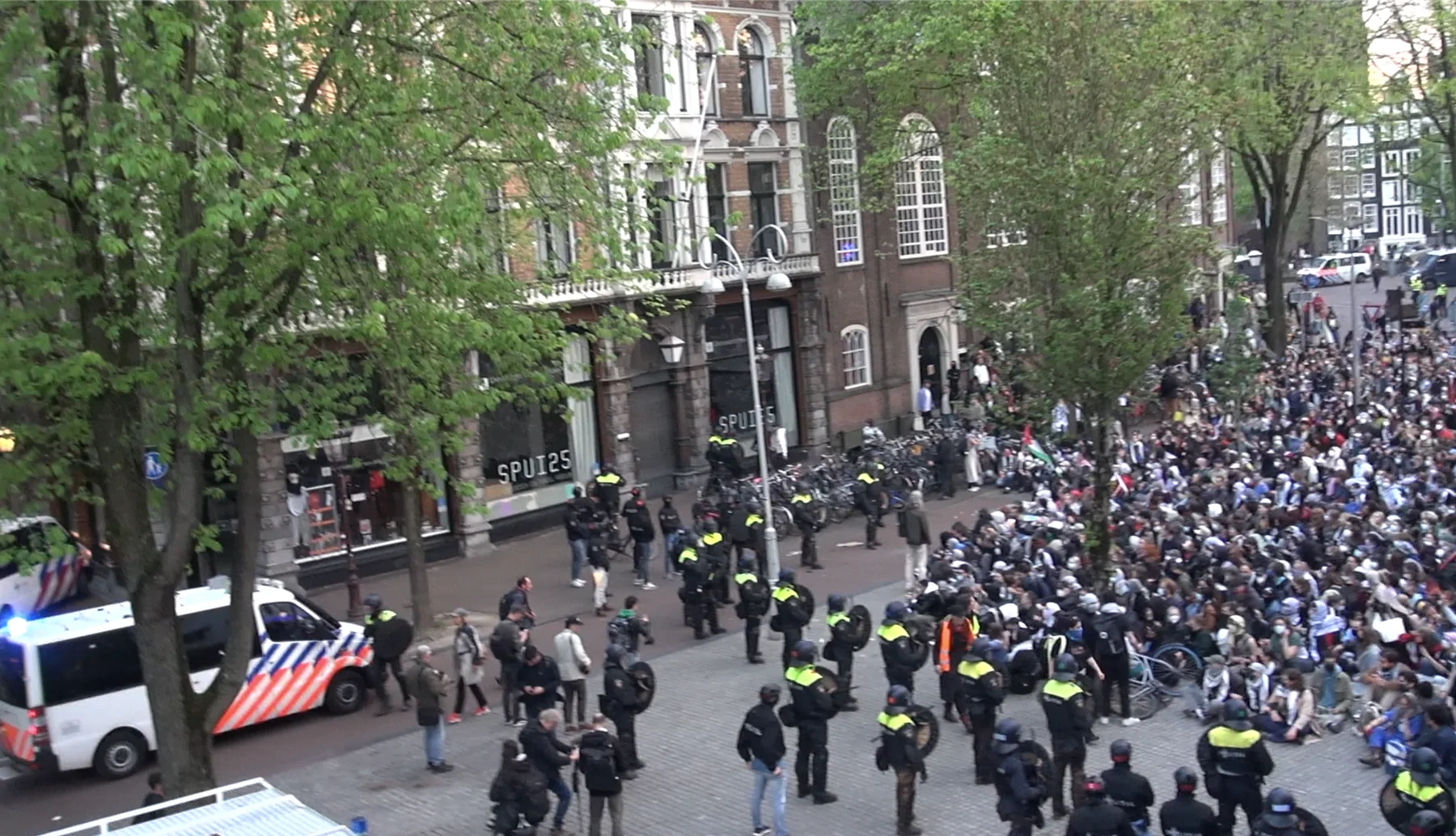
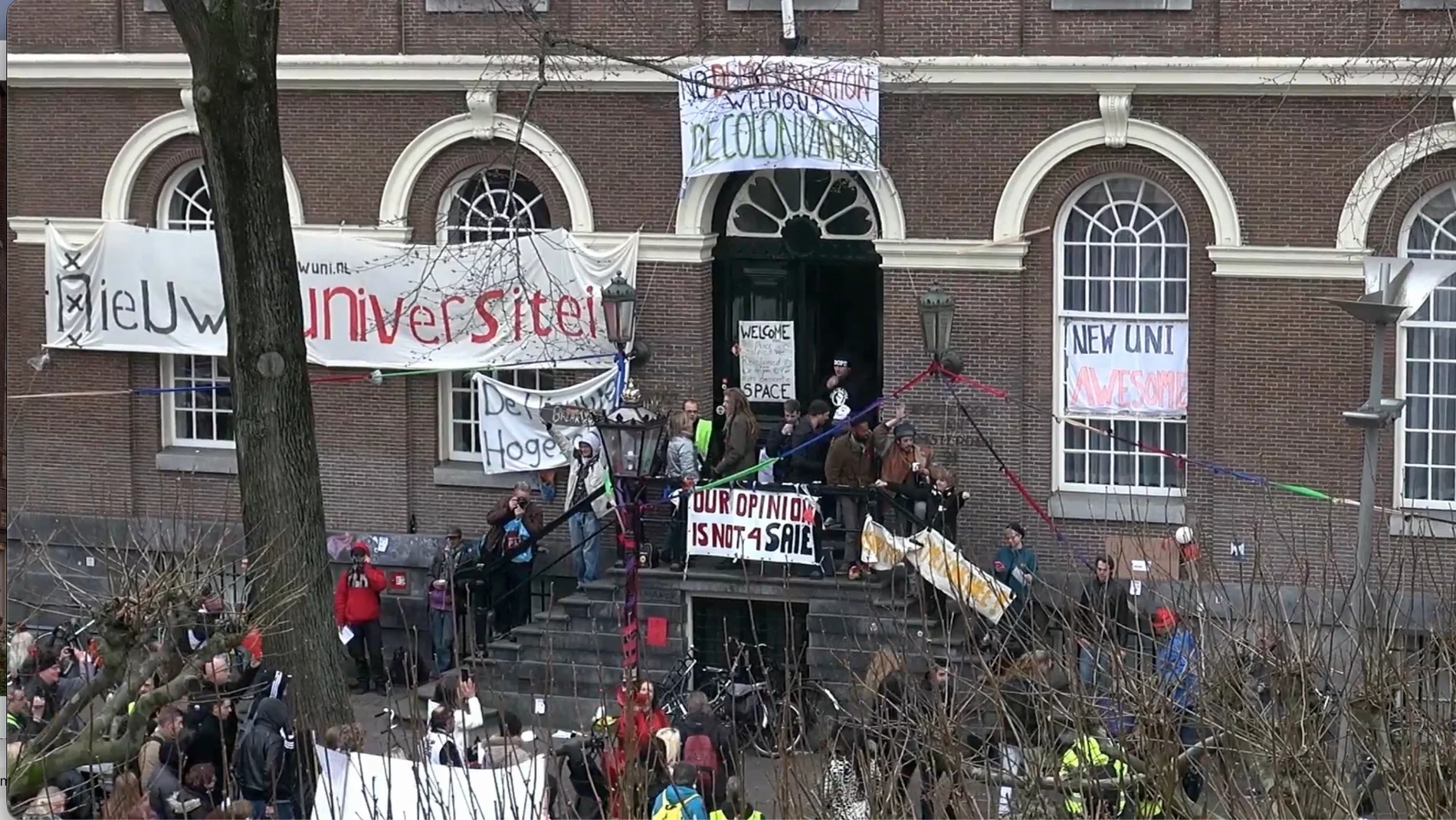
Demonstrations and the pressure of Amsterdam’s city centre begin immediately outside the gate. That contrast is essential. The Begijnhof does not lie outside the city; it forms a world within it.
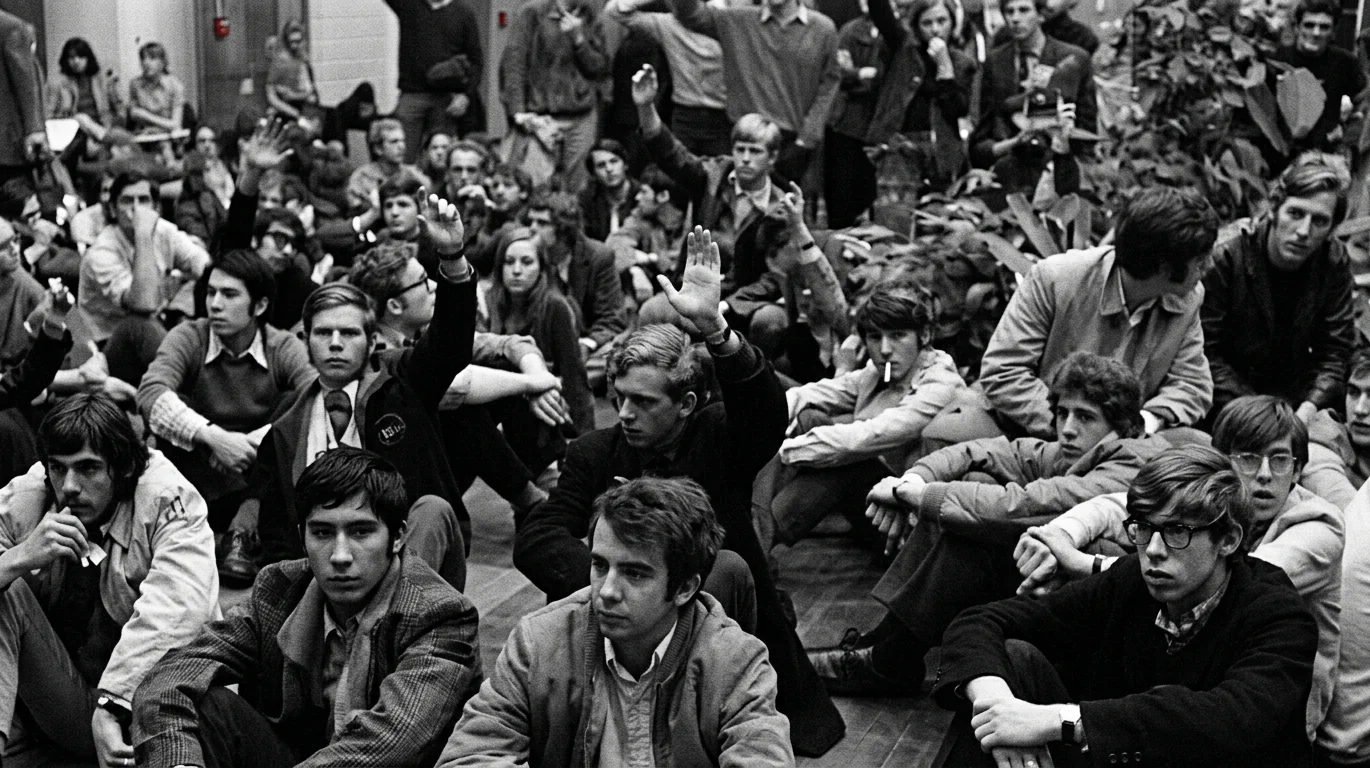
The Maagdenhuis on the Spui remains, in both the last century and this one, a place where social and political discontent becomes visible.
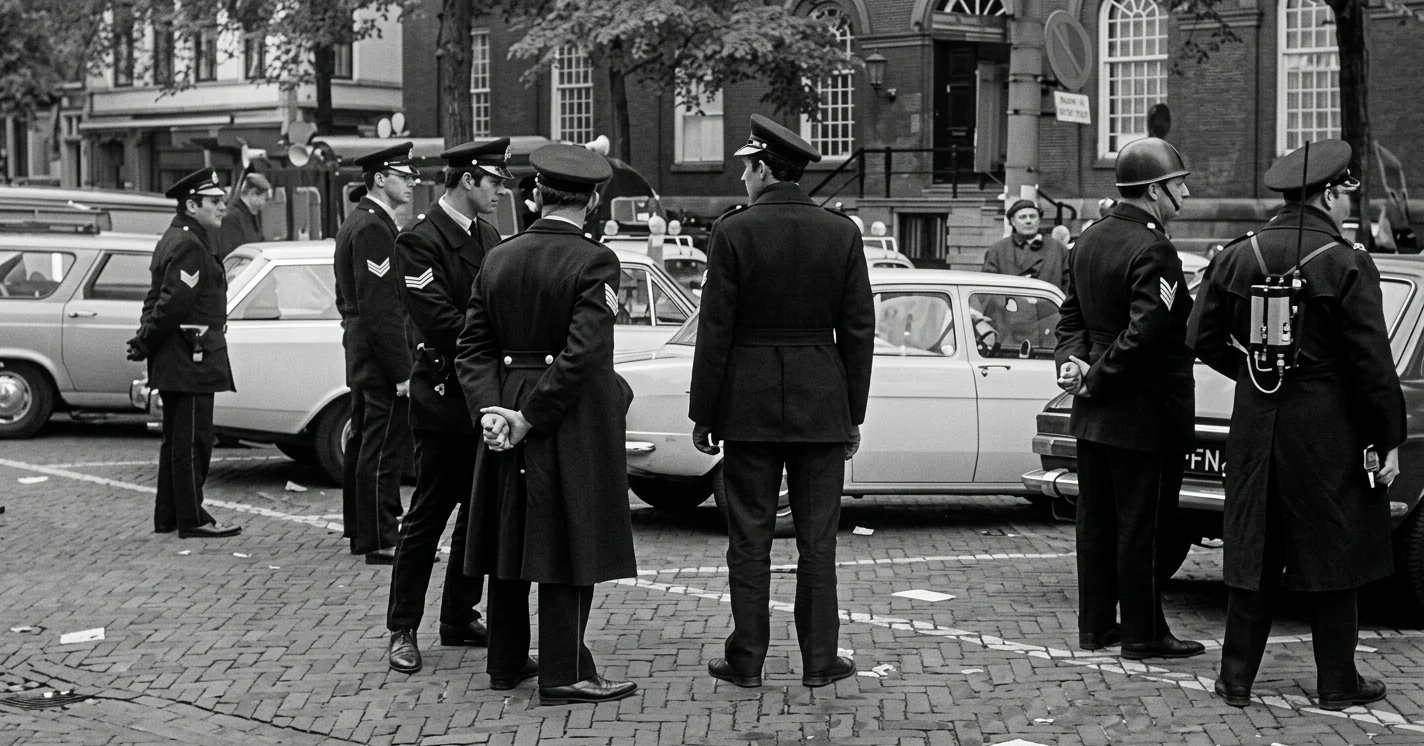
Police on the Spui near the Maagdenhuis.
The film
The film opens the gate to a world that is normally seen only in passing. Information about screenings will appear here shortly.